Canada’s meat processing industry is one of the country’s largest and most stable employment sectors, generating over $25 billion annually and providing jobs to more than 65,000 workers across the nation. If you’re seeking a recession-resistant career with competitive wages, comprehensive benefits, and genuine immigration opportunities, the meat processing sector might be your ideal path forward.
Whether you’re a newcomer exploring Canada work visa options or a resident considering a career change, meat processing offers more than you might expect—steady employment, advancement potential, and wages that often surpass other food industry positions. In this comprehensive guide, we’ll explore everything from meat processing job salaries and requirements to the day-to-day realities and long-term career prospects in this essential Canadian industry.
Understanding the Meat Processing Industry in Canada
Canada’s meat processing sector plays a vital role in feeding both domestic and international markets, with facilities operating across every province.
Industry Overview and Economic Impact
The sector processes beef, pork, poultry, lamb, and specialty meats for Canadian consumers and export markets worldwide. Major processing hubs exist in Alberta (beef processing capital), Ontario (diverse processing including poultry), Quebec (significant pork processing), Manitoba (major hog processing), and Saskatchewan (growing beef sector). The industry maintains year-round operations with consistent demand, making it remarkably stable even during economic downturns.
Types of Meat Processing Facilities
You’ll find various facility types offering different work environments. Large-scale abattoirs and slaughter facilities handle primary processing of livestock. Further processing plants create value-added products like sausages, deli meats, and prepared foods. Poultry processing facilities specialize in chicken and turkey operations. Custom cutting and specialty meat shops serve local markets. Each facility type offers unique opportunities and work conditions.
Meat Processing Job Roles and Responsibilities
The industry encompasses diverse positions beyond the processing line, creating opportunities for various skill levels and interests.
Entry-Level Positions
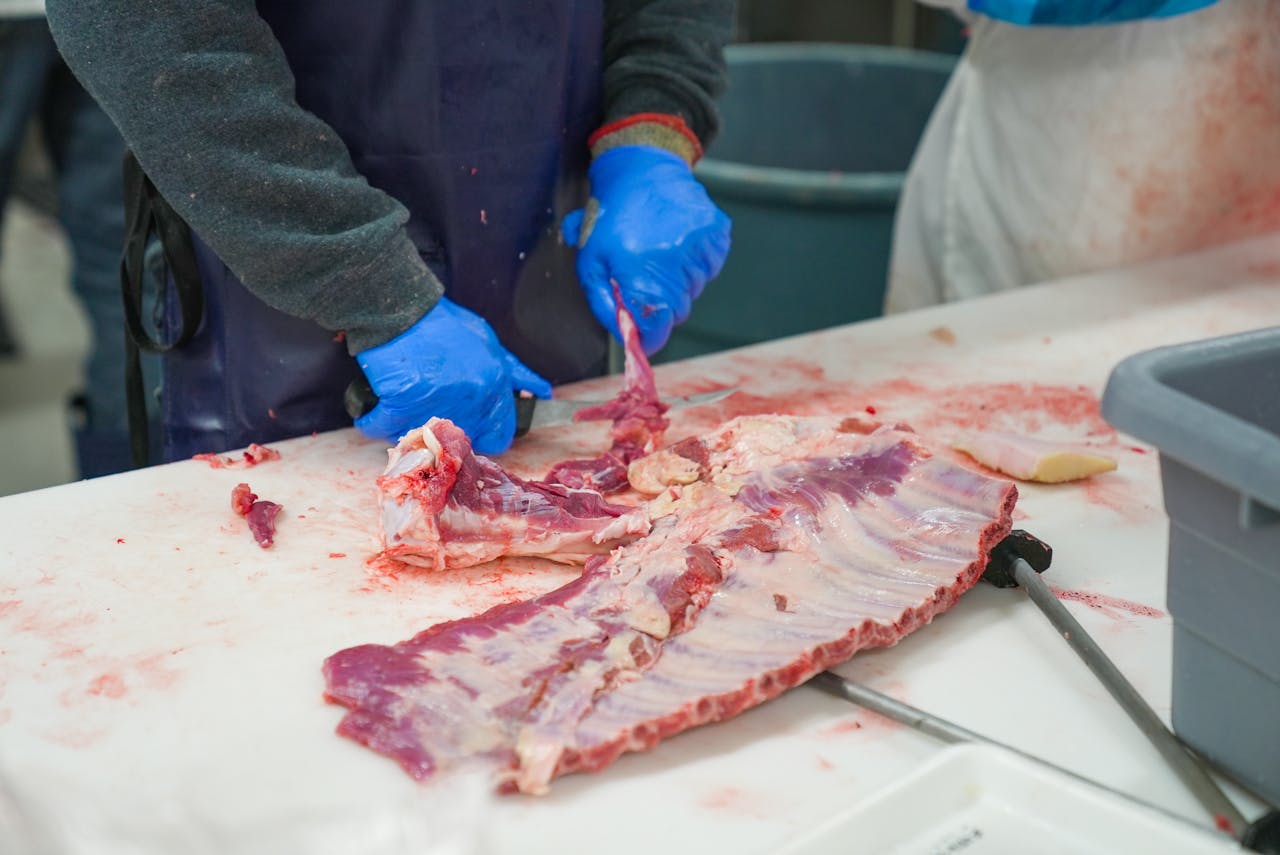
Production line workers perform cutting, trimming, and packaging tasks. Sanitation workers maintain facility cleanliness and food safety standards. General laborers handle materials, supplies, and support operations. Packaging operators ensure products are properly sealed and labeled. These positions typically require minimal prior experience and provide comprehensive on-the-job training.
Skilled and Specialized Roles
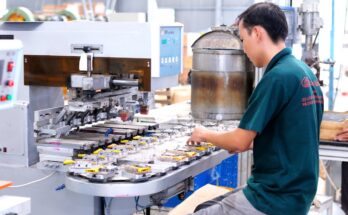
Meat cutters and butchers require precision knife skills and product knowledge. Quality control inspectors ensure compliance with Canadian food safety regulations. Machine operators run sophisticated processing and packaging equipment. Maintenance technicians keep facilities operational and equipment running. These roles command higher wages and often require specific training or certifications.
Supervisory and Management Opportunities
Shift supervisors oversee production teams and workflow. Production managers coordinate entire processing operations. Food safety managers ensure regulatory compliance. Plant managers handle overall facility operations. The industry actively promotes from within, meaning entry-level workers frequently advance to leadership positions.
Meat Processing Salary in Canada: Compensation Breakdown
Let’s discuss the financial reality of meat processing careers—because your earning potential matters when planning your future.
Entry-Level Wages
Starting positions typically pay $15.50 to $18.50 per hour, translating to $32,000-$38,500 annually for full-time work. Many facilities offer immediate employment with training provided, making these accessible first jobs in Canada. Within six months to a year, workers commonly see wage increases based on performance and skill development.
Experienced Worker Earnings
With 2-5 years of experience, wages increase to $18-$23 per hour ($37,500-$48,000 annually). Skilled butchers and meat cutters earn $20-$28 per hour ($42,000-$58,000 yearly). Specialized roles like quality inspectors command $22-$30 per hour ($46,000-$62,500 annually). These figures don’t include overtime, which significantly boosts total compensation.
Additional Compensation Factors
Overtime opportunities are abundant in meat processing, with time-and-a-half rates during peak seasons. Shift differentials add $1-$3 per hour for evening and night shifts. Weekend premiums provide bonus pay for Saturday and Sunday work. Many facilities offer production bonuses tied to output and quality targets. When you calculate total annual earnings including overtime and premiums, many workers gross $45,000-$60,000 or more.
Comprehensive Benefits Packages
Beyond wages, most meat processing employers provide extended health and dental coverage, vision care benefits, prescription drug plans, employer-matched pension or RRSP contributions, paid vacation starting at two weeks, sick leave and personal days, life and disability insurance, and some even offer profit-sharing programs. The total compensation value often exceeds base salary by 25-35%.
Immigration Pathways for Meat Processing Workers
Canada actively recruits foreign workers for the meat processing sector due to ongoing labor needs, creating excellent immigration opportunities.
Temporary Foreign Worker Program (TFWP)
The meat processing industry extensively uses the TFWP to address labor shortages. Employers sponsor work permits for positions they cannot fill domestically. These permits typically last 1-2 years with extension possibilities. The program requires minimal prior experience for many positions, focusing instead on willingness to work and reliability. Your employer handles most immigration paperwork, simplifying the process.
Rural and Northern Immigration Pilot (RNIP)
Many meat processing facilities operate in smaller communities participating in this permanent residence program. Communities like Brandon (Manitoba), Moose Jaw (Saskatchewan), and others actively recruit meat processing workers. The pathway offers faster processing than traditional programs and requires a genuine job offer from an eligible employer in the community.
Provincial Nominee Programs (PNP)
Several provinces prioritize meat processing workers in their immigration streams. Alberta’s Opportunity Stream includes food processing workers. Manitoba actively nominates meat processing employees. Saskatchewan lists food processing as in-demand. These programs can lead to permanent residence within 12-24 months of starting work.
Atlantic Immigration Program
Facilities in New Brunswick, Nova Scotia, Prince Edward Island, and Newfoundland and Labrador participate in this employer-driven immigration pathway. It offers streamlined processing and doesn’t require LMIA (Labour Market Impact Assessment) in many cases, making it faster than TFWP for permanent residence.
A Real Story: From Newcomer to Supervisor
Consider Ahmed’s journey. He arrived from Egypt three years ago with a bachelor’s degree but no Canadian experience. “I started on the cutting line at a pork processing plant in Red Deer, Alberta, earning $16.50 per hour,” he recalls. “The work was physically demanding, and I worried my education was wasted. But the reality surprised me.”
Within eight months, Ahmed’s reliability and attention to detail caught management’s attention. They sponsored his food safety certification training. Eighteen months after starting, he became a quality control inspector at $23 per hour. “The overtime during busy periods meant I earned over $52,000 in my second year. My employer supported my permanent residence application through Alberta’s PNP. Now I’m a shift supervisor earning $28 per hour, and I’ve brought my parents to visit twice. This industry gave me stability I couldn’t find in my field back home.”
Ahmed’s experience isn’t unique. The meat processing sector’s structured advancement paths and willingness to invest in reliable workers create genuine opportunities for those who commit to the work.
Essential Skills and Requirements
Success in meat processing doesn’t require extensive education, but certain attributes significantly improve your prospects.
Educational Requirements
Most positions require high school completion or equivalent. Food safety certifications (often employer-provided) enhance opportunities. Butchery or meat cutting certificates open higher-paying positions. First aid and WHMIS (Workplace Hazardous Materials Information System) training are valuable additions.
Physical Requirements and Stamina
Meat processing demands physical capability. You’ll stand for extended periods (8-12 hour shifts), work in cold environments (refrigerated areas often 2-4°C), perform repetitive motions with proper technique, lift and carry materials (typically 15-25 kg), and maintain focus during repetitive tasks. Facilities provide ergonomic support and job rotation to minimize strain, but realistic self-assessment of physical readiness matters.
Critical Soft Skills
Attention to detail ensures food safety and quality standards. Manual dexterity and hand-eye coordination support precision work. Teamwork makes production lines function smoothly. Reliability and punctuality are non-negotiable in processing environments. Adaptability helps you learn new processes and adjust to changing demands.
Language Requirements
Functional English or French facilitates safety communication and teamwork. Canadian Language Benchmark Level 4-5 suffices for most positions. Many employers provide workplace language training programs. Safety instructions are often provided in multiple languages, and diverse teams frequently include bilingual colleagues who assist newcomers.
Workplace Safety and Food Safety Standards
Canadian meat processing facilities operate under strict regulations protecting both workers and consumers.
Worker Safety Protocols
All facilities must comply with provincial occupational health and safety legislation. Employers provide comprehensive safety training covering equipment operation, knife safety, chemical handling, and emergency procedures. Personal protective equipment (PPE) including cut-resistant gloves, safety boots, hairnets, and protective clothing is mandatory and employer-provided. Regular safety meetings, inspections, and ongoing training reinforce safe practices.
Food Safety Compliance
Canada’s food safety system ranks among the world’s strictest. The Canadian Food Inspection Agency (CFIA) oversees meat processing facilities. Workers must follow Hazard Analysis Critical Control Point (HACCP) protocols. Sanitation standards require rigorous cleaning and hygiene practices. Temperature monitoring and documentation ensure product safety. These regulations create a professional work environment where standards matter and quality is prioritized.
Your Rights as a Worker
You’re entitled to refuse unsafe work without penalty, receive proper training before performing tasks, have access to safety equipment and facilities, report concerns to health and safety representatives, and receive workers’ compensation for workplace injuries. Understanding your rights empowers you to work safely and speak up when necessary.
Finding Meat Processing Jobs in Canada
Ready to launch your career? Here’s where to look and how to succeed.
Major Employers and Job Search Strategies
Large processors like Cargill, JBS Canada, Maple Leaf Foods, and Olymel regularly hire across multiple provinces. Regional processors operate in most communities with livestock industries. Job Bank Canada lists numerous meat processing positions. Indeed Canada and Workopolis feature extensive food industry postings. Recruitment agencies specializing in food processing can connect you with opportunities and guide visa applications.
Application Tips and Interview Preparation
Highlight reliability, willingness to learn, and any food industry experience. Emphasize physical capability and stamina for demanding work. Express flexibility regarding shifts, overtime, and schedule changes. Demonstrate understanding of food safety importance. Prepare questions about training programs, advancement opportunities, and immigration support.
What Employers Seek
Processing facilities value dependability above all else. They look for workers who show up consistently, follow instructions precisely, maintain quality standards, work safely, and contribute to team success. Previous meat processing experience helps but isn’t always necessary—attitude and work ethic often matter more.
Career Growth and Long-Term Prospects
Starting on a processing line doesn’t mean staying there indefinitely. The industry offers clear advancement pathways for committed workers.
Advancement Opportunities
Entry-level workers can progress to skilled cutting positions within 1-2 years, move into quality control or inspection roles with certification, advance to equipment operation positions, transition to maintenance with technical training, or enter supervisory and management tracks. Many plant managers and supervisors started on production lines, proving advancement isn’t just possible—it’s common for those who pursue it.
Industry Stability and Future Outlook
Despite automation trends, human workers remain essential in meat processing. Skilled cutting and quality assessment require human judgment. Facility supervision and management need experienced personnel. Canada’s growing population increases domestic demand. Export markets continue expanding, particularly to Asia. The aging workforce creates ongoing opportunities for new workers. This combination ensures long-term employment stability.
FAQs: Meat Processing Careers in Canada
Q: Is meat processing work difficult for someone with no experience?
A: While physically demanding, most facilities provide comprehensive training for beginners. You’ll start with simpler tasks and gradually learn more complex skills. The work requires stamina and attention to detail, but thousands of workers with no prior experience succeed annually. Proper technique training and ergonomic support minimize physical strain.
Q: Can vegetarians or people with religious dietary restrictions work in meat processing?
A: Yes, many facilities employ workers with various dietary practices and beliefs. The work is professional processing, and personal dietary choices don’t typically conflict with job duties. Some workers appreciate the income opportunity despite personal food preferences. However, assess your comfort level honestly before committing.
Q: How long does it take to get permanent residence through meat processing jobs?
A: Timelines vary by immigration pathway. Provincial Nominee Programs typically process within 12-24 months after starting work. The Rural and Northern Immigration Pilot can be faster. Atlantic Immigration Program often processes in 12-18 months. Working temporarily while pursuing permanent residence is common, with many workers achieving PR within two to three years.
Q: Are meat processing facilities sanitary and safe places to work?
A: Modern Canadian facilities maintain high sanitation standards under strict CFIA oversight. Regular cleaning, hygiene protocols, and safety inspections ensure clean, professional environments. While challenges exist, Canada’s regulatory framework ensures facilities meet stringent standards that protect both workers and food safety.
Q: What is the work-life balance like in meat processing?
A: Shift work is standard, which some workers find challenging initially but others appreciate for schedule consistency and shift premiums. Many facilities offer compressed work weeks (four 10-hour days) or rotating schedules providing extended time off. Overtime can be substantial during peak seasons, impacting work-life balance, but also significantly boosting earnings. Most workers find acceptable balance once adjusted to the rhythm.
Conclusion: Your Opportunity in an Essential Industry
The meat processing industry in Canada offers something increasingly rare in today’s economy—stable, accessible employment with genuine advancement potential and clear immigration pathways. With salaries ranging from $32,000 for entry-level positions to $60,000+ for experienced workers (including overtime), comprehensive benefits, and employer-supported permanent residence opportunities, this sector provides solid foundations for your Canadian future.
Yes, the work is physically demanding. Yes, you’ll likely start early in the morning or work unconventional shifts. And yes, you’ll work in cold environments following strict protocols. But you’ll also join an industry that feeds millions, values reliability and commitment, and actively invests in workers who show dedication.
The facilities are modern, safety is paramount, and the pathways from processing line to supervisor to manager are well-worn by workers who started exactly where you’d begin. Canada needs meat processing workers—your skills, your reliability, your contribution to an industry that never stops and never goes away.
Whether you’re supporting family back home, building your new life in Canada, or seeking stable employment that rewards hard work, meat processing deserves your consideration. Thousands of workers have built comfortable lives, purchased homes, educated their children, and achieved their Canadian dreams starting on a processing line.
Your journey could begin with a single application. The industry is hiring, employers are sponsoring, and opportunities are waiting. Take that first step. Research employers in your target province, prepare your application, and explore the immigration pathways available. Your future colleagues are already building their success stories, one shift at a time—why shouldn’t you be next?
After all, every meal on Canadian tables carries the dedication of workers who showed up, maintained standards, and contributed to feeding the nation. That could be you. And who knows? In three years, you might be the supervisor training the next newcomer, sharing your story of how meat processing in Canada changed everything.